The New Information Order: The Collapse of Search And The Rise of 'Synthetic Truth'
Originally published on linkedin
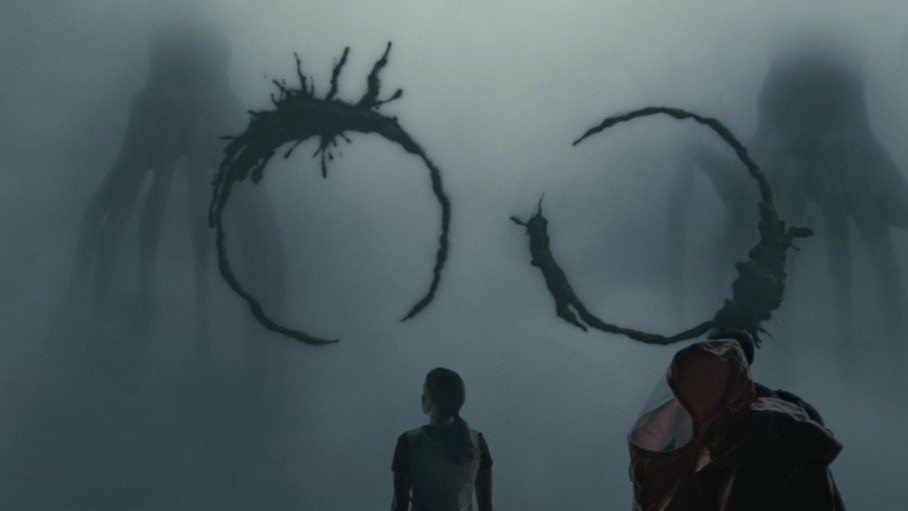
Note: This is a companion to “OpenAI vs Google: It’s Bigger Than Search.” That explored who’s winning. This looks at what we’re losing; as AI summaries and model-led answers reshape how we know what we know.
It ain't what you don't know that gets you into trouble, it's what you know for sure that just ain't so - Mark Twain
We are living through a collapse - quiet, invisible, but foundational.
Search, the epistemic engine of the internet age, is fading. In its place rises something more coherent, more confident, and infinitely more controlled: synthetic truth. We don’t yet fully understand it, but we’re already relying on it.
This isn’t just technological transition. It’s constitutional. A quiet shift in the informational fabric of society - in who authors it, who arbitrates it, and who benefits from it.
The world that search built - plural, messy, slow, comparative - is being replaced by a world of automated synthesis, invisible media, and model-constructed truth. And in that world, the question isn’t just “what is true?” It’s who gets to decide what you never see.
The End of the Search
Google search was never neutral, but it was navigable. You could follow links, check sources, compare ideas. Knowledge was distributed, disjointed, and, crucially, disagreeable. You still had to do the work of thinking.
It was noisy. But it was also democratic.
LLMs change that. They collapse the web into narrative - fluent, simplified, persuasive. Instead of a map, we’re given a sentence. Instead of options, we’re given inferences, conclusions and decisions.Search was a dialogue with the internet. LLMs are a monologue from a model.
And that monologue doesn’t pull from the open web - it draws from a trained memory bank, shaped by past data, context windows, and invisible system choices. It is a synthesis from pre-digested knowledge, not an exploration of new information.
We no longer ask the world. We ask a construct of it.
Synthetic Truth Is The New Alternate Truth
What’s dangerous is not that LLMs hallucinate. It’s that they sound like they don’t.
In the post-search world, the boundary between accuracy and coherence collapses. Models give answers that “feel” right - statistically smooth, semantically complete, syntactically pristine.
But fluency is not a proxy for fact. And factuality is no longer the objective. We’re irritated by the lag of GPTs and AI copilots - already forgetting what “old speed” even felt like. We’ve been conditioned to crave immediacy, to expect intelligence without friction. The tradeoff? Precision is optional. Confidence is the default – and we’ve never been great at spotting when it’s only masquerading as competence, even in real life.
What we are building is a system of knowledge that optimizes for confidence, not contradiction. And in doing so, we eliminate the tension that once made search powerful: that multiple truths could coexist long enough for you to weigh them.
Synthetic truth doesn’t lie. It prevents the question from needing to be asked again.
The Disappearance of Media
As LLMs become the primary interface to knowledge, the nature of media itself is changing. Old media asked for your attention. New media hides inside the model.
It doesn’t show you its sources. It doesn’t cite the journalist, the scientist, or the blogger. It doesn’t surface context. It flattens voice, abstracts nuance, and removes identity. It consumes the work of others, digests it, and serves it as “insight.” The model becomes the medium; and the medium is invisible.
In the new media order, authority is no longer earned - it’s engineered. You don’t trust the outlet. You trust the output. You trust the machine.
Net Neutrality Is Dead. Epistemic Neutrality Is Next.
In the early internet, net neutrality guaranteed that all traffic - regardless of source - would be treated equally. It was the infrastructural backbone of an open web.
An internet commandment is quietly breaking: “Thou shalt click to know.”
With AI summaries, users get the gist before the source. Clicks collapse. The pageview, once a measure of interest, now just signals redundancy. Attention is being captured — but not directed.
In the world of LLMs, we face a new asymmetry: epistemic centralization.
Your questions no longer flow through open protocols. They are processed in opaque stacks, informed by static training data, guided by personalization, and mediated by unaccountable weighting. The model decides what matters. It elevates what’s probable; and quietly buries what’s uncertain.
In this system, the very act of knowing is centralized. The internet may still be open - but your access to its plurality is not.
This is not just a UX change. It is a restructuring of power. You used to win a country with tanks in its capital. Now you do it with a trending narrative, seeded at scale. A model fine-tuned to nudge sentiment can outmaneuver an army or outvote a democracy. What happens when LLMs can simulate conviction, distort consensus, and never sleep? The coup is no longer televised. It’s autocomplete.
Prompt-Engineered Politics
Power used to come from controlling infrastructure. Now, it comes from controlling the synthetic memory of models - what they’ve been trained to know, what they retain in context, and how they personalize that for each query.
Those who build, train, and gate-keep LLMs are no longer just tech companies - they are sovereigns of epistemology. They decide what is included in the model’s internal knowledge, what gets prioritized in context, and what quietly vanishes into statistical irrelevance.
They do this not maliciously, but structurally. An LLM’s memory is a fossilized dataset - a compressed consensus of past text and prevailing viewpoints. And like all consensus, it favors the loud, the frequent, and the previously encoded.
This is the new information order — where truth is compressed, voice is abstracted, source is invisible, and agency is quietly rerouted.
And unlike governments or media outlets, LLMs operate without public oversight. Their governance is backend. Their politics are prompt-engineered. Their biases are quiet - but absolute in effect.
Before the Question Disappears
This future isn’t written in code. It’s written in what we choose to value.
We can build for - transparency, not just trust; exploration, not just answers; plurality, not just coherence; open knowledge, not just compressed model recall.
But to do that, we must first understand that what’s at stake isn’t technology. It’s epistemic sovereignty - our collective right to ask, to wonder, to disagree, and to seek.
And in a world of synthetic truth, that right begins with a question no model is designed to answer:
What have I not been shown?
If you're here and like what you've read; you may choose to subscribe to this newsletter.
PS : And; the cover pic that didn't make the cut.
Related essays
Vishnu Rajkumar
Vishnu leads AI engineering at Microland and writes about artificial intelligence, systems, judgment, work and technological change.
About the author →