The Rise of the New Guardians: Rethinking Infrastructure Management in the Age of AI
Originally published on linkedin
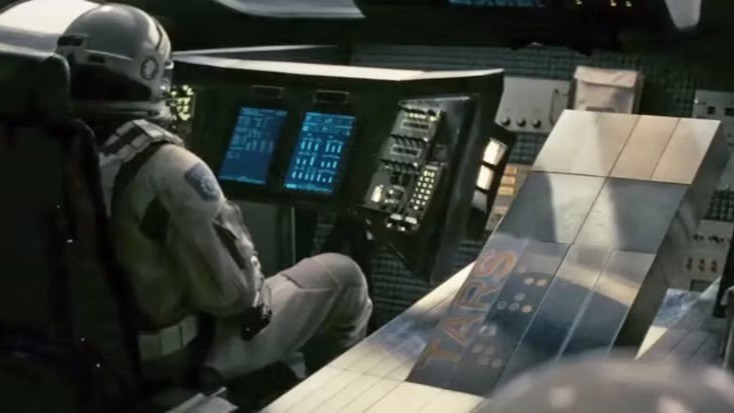
"I Have A Cue Light I Can Use To Show You When I’m Joking, If You Like." - TARS
For years, infrastructure was the silent partner of innovation. It ran in the background—quietly, reliably—powering transformation without ever asking for applause. It kept the lights on, the data safe, the servers patched. And when things broke at 2 a.m., it was infrastructure teams who picked up the call.
But that era is ending.
Today, infrastructure isn’t just foundational—it’s fluid. It scales itself, fixes itself, adapts in real time. It's becoming intelligent, autonomous, and in many ways, invisible.
This isn't a gentle evolution. It's a rupture. The collision of AI, cloud-native design, and developer-first culture has rewritten the rules. And the traditional infrastructure playbook? It's not just outdated—it's incompatible with what’s next.
What AI 'Really' Means in Infrastructure
Let’s clear something up: AI in infrastructure isn’t about robots replacing engineers. It’s about using data to close feedback loops that were once entirely manual—and increasingly unsustainable.
Think of it like this:
Anomaly detection: Systems learn what “normal” looks like—then raise flags when things deviate. That might be a spike in latency, a memory leak, or an unusual traffic pattern. Root cause analysis: Logs, traces, and metrics are automatically correlated to pinpoint where problems likely began—surfacing answers in seconds, not hours. Predictive scaling: Resources are added before demand spikes, based on patterns the system has already seen—saving time, money, and user experience. Autonomous remediation: Systems don’t just notice problems—they act. Restarting a service, isolating a workload, or rolling back a change without waiting for a human ticket.
This isn’t science fiction. These are quickly becoming baseline expectations. We're moving from infrastructure as a checklist to infrastructure as a learning, adapting system.
The goal isn’t to eliminate human operators. It’s to elevate them—freeing them from constant firefighting so they can focus on strategy, architecture, and the things that actually move the needle.
The Modern Architectural Shift
Why now? Because the way we build software has changed. And infrastructure is caught in the middle of that transformation.
Stateless services mean individual components can be restarted, replaced, or scaled without affecting the whole. That gives us resilience—but it also introduces volatility. Declarative infrastructure shifts the focus from manual operations to expressing intent through code. Systems don’t wait for instructions—they interpret and act. CI/CD pipelines push updates to production constantly—sometimes hundreds of times a day. Infrastructure is no longer a separate layer; it’s part of the release flow. Distributed architectures span regions, clouds, and edges. There’s no single point of control—or even visibility. Everything’s everywhere, all at once.
Legacy models assumed a steady state—a system you could observe, reason about, and adjust manually. But modern systems don’t sit still long enough for that. They're too fast, too interconnected, too ephemeral.
We’re no longer managing machines. We’re managing flows—of data, requests, risk, and change.
And in this environment, AI isn’t just a helpful addition. It’s how we keep up.
Infrastructure Providers' Predicament
If you build platforms or tools for infrastructure, this isn’t just a tech shift—it’s an existential one.
What’s falling behind?
Endless dashboards that expect humans to connect the dots Alert systems that cry wolf every time a metric twitches Interfaces built around resources instead of outcomes Pricing tied to headcount or static configurations
To stay relevant, providers must stop thinking like tools—and start acting like partners. That means:
Surfacing insight, not just data: The value isn’t in what you collect—it’s in what you understand. Enabling closed control loops: Systems should observe, decide, and act—within clear, trusted boundaries. Integrating with the developer lifecycle: Infrastructure must move at the speed of code—not slow it down. Prioritizing outcomes over options: Users don’t want 1,000 knobs. They want confidence in performance, reliability, and cost. Designing for autonomy: The best systems heal, adapt, and scale on their own. Human input is reserved for setting intent—not micromanaging execution.
This is not just a UI redesign. It’s a philosophical shift.
The Quiet Advantage for the New Guard
Many legacy vendors are trapped by their past—built for a world of static architectures, manual controls, and human-heavy workflows. But that’s not the world we live in anymore.
The new guardians will win because they’re not burdened by those assumptions.
They:
Start with AI-native mental models—not bolt-on machine learning Build for autonomy and resilience—not just visibility Align with business outcomes—not resource usage Design for the platform engineer and the developer—not just the sysadmin
In this new world, success isn’t measured by how many dashboards you provide—but by how often they’re not needed.
It’s not about shouting louder. It’s about being invisible when everything works, and decisive when it doesn’t.
The New Role: Guardian, Not Gatekeeper
So where does this leave the people?
In this future, the role of the infrastructure manager isn’t to gatekeep access or enforce rules. It’s to guard the flow—to ensure that systems move safely, efficiently, and sustainably from idea to production to impact.
And the tools that support them? They need to reflect that purpose.
They should stay out of the way when things are smooth—and show up with clarity, context, and action when they’re not.
It’s not about replacing the old guard with a newer, shinier one. It’s about evolving beyond them—quietly, decisively, and irreversibly.
The future of infrastructure isn’t about doing more. It’s about knowing better.
Related essays
Vishnu Rajkumar
Vishnu leads AI engineering at Microland and writes about artificial intelligence, systems, judgment, work and technological change.
About the author →